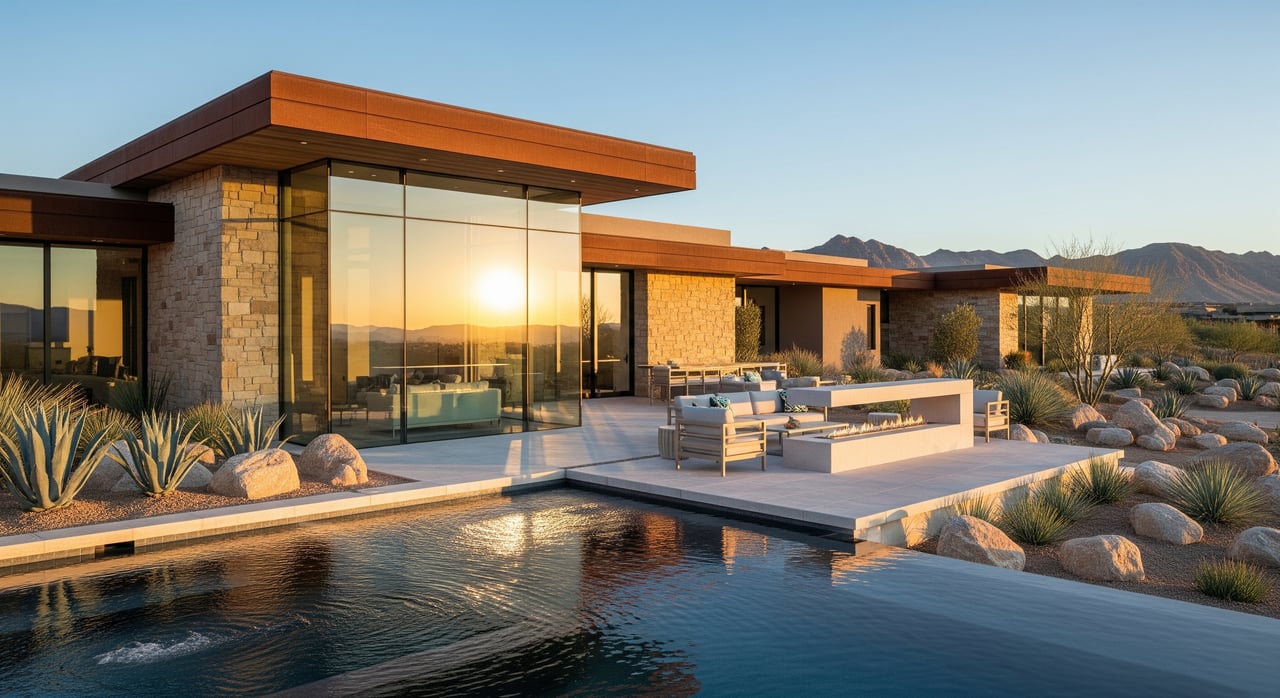
Is your next home more than a place to live? If you are drawn to clean lines, seamless indoor–outdoor living, and a palette that feels at home in the Mojave, desert contemporary might be exactly what you are looking for at The Ridges. You want architecture that performs in Las Vegas heat and highlights hillside views without overwhelming the landscape. In this guide, you will learn what defines desert contemporary in The Ridges, how the style handles our climate, what to verify during showings, and how ARC reviews typically work so your plans stay on track. Let’s dive in.
Why The Ridges fits desert contemporary
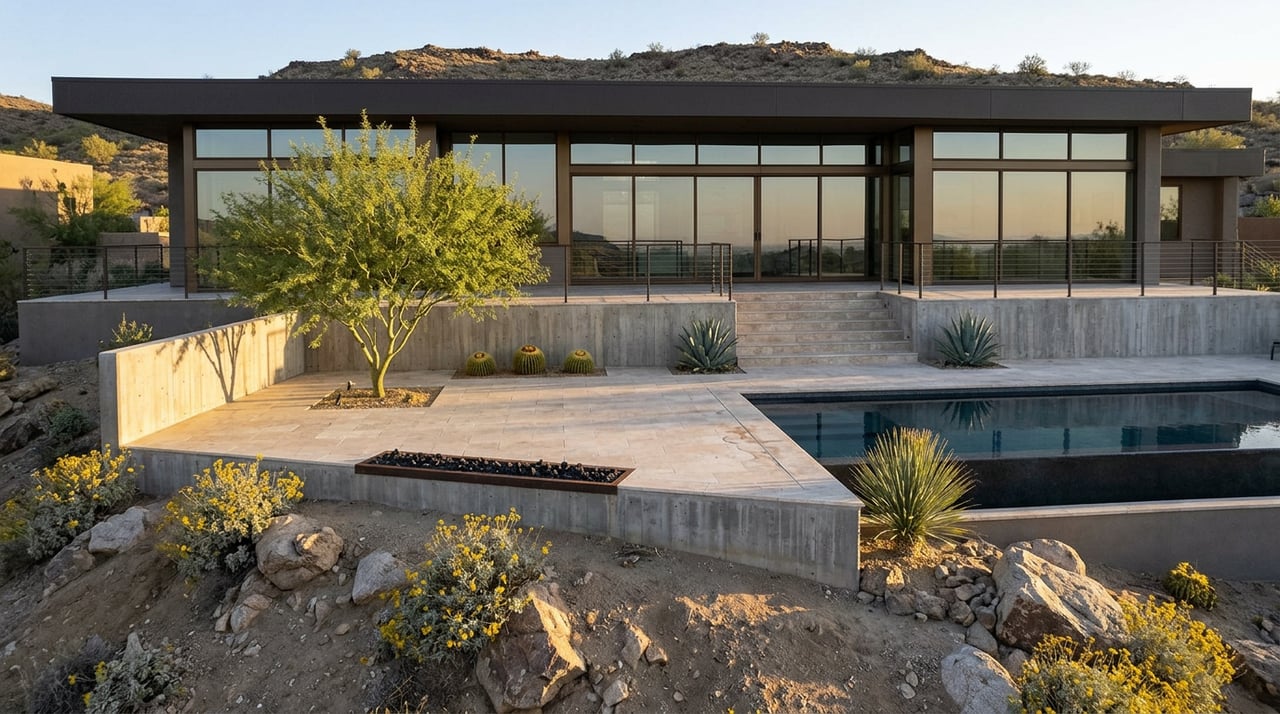
The Ridges is known for custom and semi-custom homes set on sloped, view-oriented lots. The terrain and long vistas shape how homes sit on the land. Desert contemporary thrives here because it uses low, horizontal massing and simple forms that step with the grade while framing views of the valley and surrounding escarpments.
You see the effect immediately. Rooflines hug the landscape, outdoor rooms extend your living space, and materials echo the color and texture of native stone and scrub. The result is a calm, view-forward experience that suits a guard-gated hillside community.
Hallmark features in The Ridges
Low-profile rooflines and massing
Flat or very low-sloped roofs create strong horizontal planes and keep visual bulk down on hillside streets. They also make it easier to integrate shading and clean roof edges. Performance depends on quality roof membranes, insulation, and well-detailed parapets.
Buyer tip: Ask about the roof membrane type and age, warranty terms, and how drainage is handled at scuppers and on sloped areas. Check flashing at parapets and transitions.
Deep overhangs and shade structures
Long overhangs, covered patios, and pergolas define the style and boost comfort by cutting direct sun. Proper depth and orientation help block high summer sun while allowing lower-angle winter sun where desired.
Buyer tip: Look for solid structural connections on cantilevered elements and confirm how runoff is managed. Estimate the shaded square footage you can actually use in peak heat.
Natural materials and muted palettes
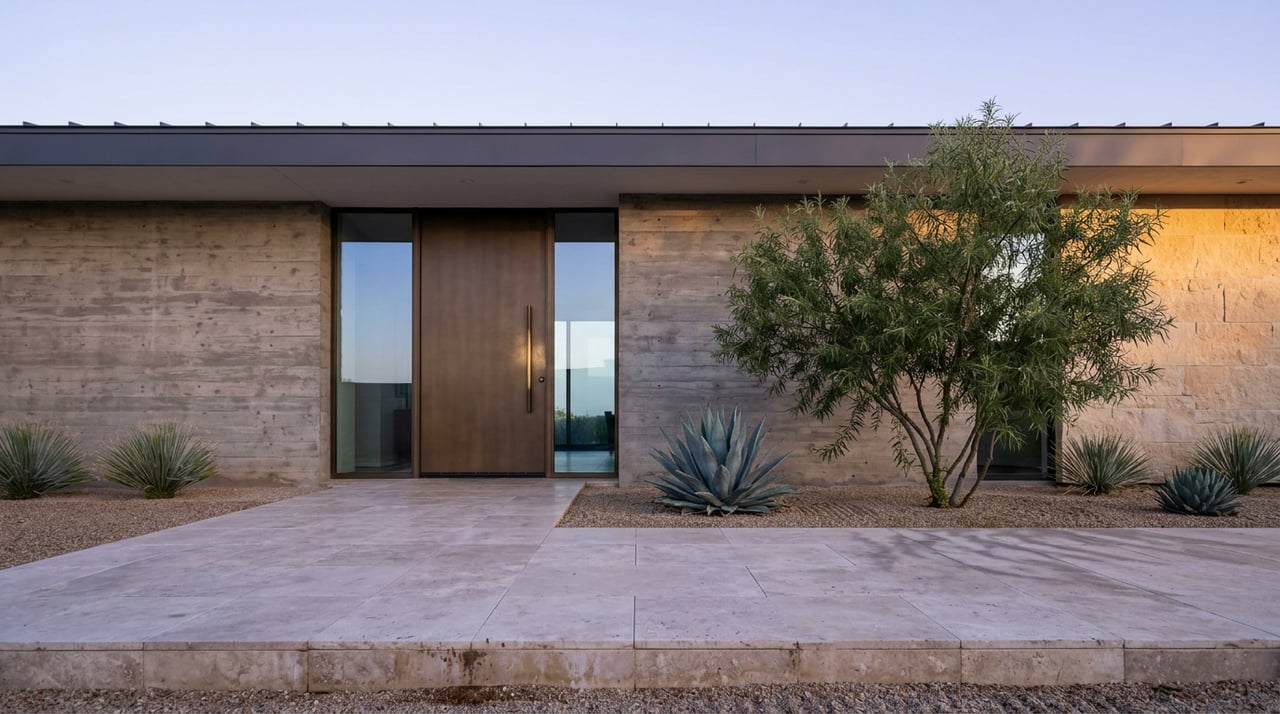
Stone, textured stucco or cementitious finishes, metal, and warm wood accents blend with desert tones like sand, warm gray, and ochre. Materials should be specified for high UV and low humidity.
Buyer tip: Verify maintenance schedules for wood and metal, sealing routines for stone, and the condition of stucco or EIFS. Ask about any past repairs and finish longevity in full sun.
Large glass and indoor–outdoor flow
Expansive glazing and pocketing doors connect living areas to patios and courtyards. To work in Las Vegas, high-performance glazing and thermally broken frames matter.
Buyer tip: Confirm window specs, age, and coatings. Ask how west-facing glass is shaded, and whether HVAC capacity and zoning adequately support large open plans.
Courtyards, patios, and outdoor rooms
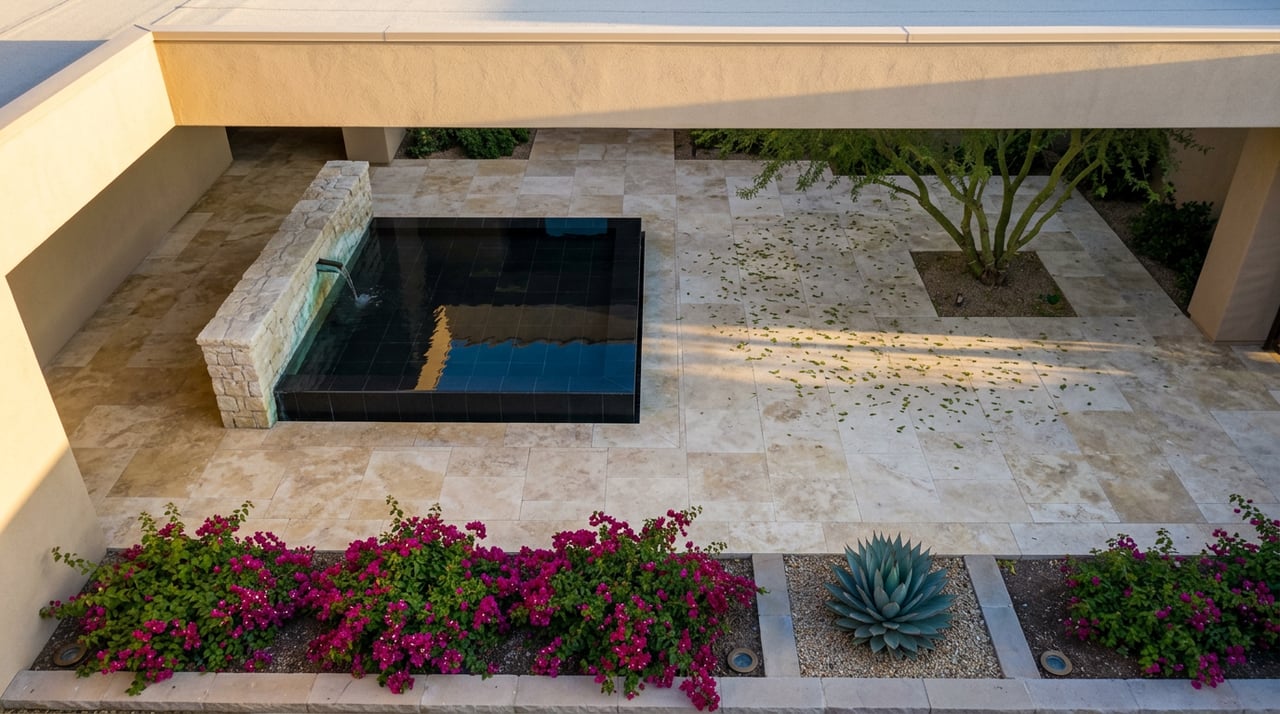
Courtyards extend living space while adding privacy and cross-ventilation. Pools and fire features are often integrated into the grade so the home reads low and composed.
Buyer tip: Request pool or water-feature permits, clarify landscape water costs, and confirm HOA rules for visible water features and required fencing.
Stepping with the slope
Split levels, terraces, retaining walls, and occasional cantilevers manage grade while preserving views. Drainage and access for maintenance are essential.
Buyer tip: For major remodels or additions, ask for geotechnical or grading reports. Walk retaining walls and terraces to check for movement, cracks, or settlement patterns.
Climate-smart design for Las Vegas
Shade and solar control
Passive shading is the first line of defense in our hot, sunny climate. Overhangs, recessed glazing, vertical fins, and operable shades reduce heat gain, especially on west exposures.
What to look for: Orientation of major glass walls, depth of overhangs, screens or fins on hard-to-shade sides, and how winter sun is handled in main living areas.
Thermal mass and insulation
Concrete, masonry, and stone can damp daily temperature swings when shaded and paired with proper insulation. A tight building envelope is key to keeping energy use reasonable.
What to look for: Recent energy audits, insulation upgrades, sealed penetrations, and high-performance windows that align with the size and placement of glazing.
HVAC capacity and ventilation
Open plans and big glass can drive cooling loads. Zoning, duct integrity, and balanced ventilation support comfort and air quality in a dry, dusty environment.
What to look for: Age and tonnage of condensers, zoning strategy, maintenance records, and any whole-house or heat-recovery ventilation features.
Water-wise landscapes
Xeriscape with native or drought-tolerant plants, efficient drip irrigation, and smart controllers is standard in Summerlin and helps control costs.
What to look for: Irrigation controller type, run-time programming, plant palette, and any documentation for turf-to-xeriscape conversions or water-use improvements.
Sun, wind, and wildfire resilience
Exterior finishes need UV resistance and regular refresh cycles. Where lots meet brush or open space, defensible space and ignition-resistant materials reduce risk.
What to look for: Maintenance timelines for sealants and finishes, ember-resistant venting where applicable, and local advisories on vegetation and access.
ARC and HOA essentials in The Ridges
The Architectural Review Committee (ARC) helps maintain community standards. Always confirm current CC&Rs and design guidelines before planning changes.
Common ARC review items:
- Exterior materials and colors
- Roof profiles, parapets, and any visible solar equipment
- Fences, gates, and walls
- Hardscape and grading changes, including retaining walls and driveways
- Major landscape updates and irrigation changes
- Additions or structural changes, including second stories and cantilevers
- Pools, spas, cabanas, and visible equipment
- Exterior lighting and any street-facing signage
Solar and renewable energy: Many ARCs allow solar with conditions like flush mounting, color-matching, and limited street visibility. Nevada law and HOA rules both apply, so confirm specifics early.
Typical process and timing:
- Schedule a pre-application review for major work.
- Submit architectural plans, finish samples, landscape and grading details, and a neighborhood impact summary.
- Expect a review timeline that may run from weeks to months depending on scope, revisions, or variances.
- Remember that ARC approval does not replace municipal permits; you often need both.
Avoid delays by:
- Using approved palettes and finishes for visible elevations
- Preserving roofline intent and lot drainage
- Including complete documentation and engineering for grading and structure
- Providing a finished landscape and irrigation plan in your submission
Buyer checklist for showings
Use this quick-reference list to verify condition and performance:
Building envelope and glazing
- Roof membrane type, age, warranty, scuppers, and parapet flashing
- Window specs: low-e coatings, double-pane, thermally broken frames
- Shading strategy for west and south glazing; operable shades where needed
Mechanical systems
- AC tonnage, age of condensers, service records, and zoning
- Ventilation strategy and air quality features for dust control
Exterior finishes
- Stucco/EIFS cracks, stone anchor integrity, wood staining schedule, metal oxidation
Landscape and water
- Xeriscape layout, plant palette, drip irrigation, controller type and programming
- Pool permits, equipment age, and water-use expectations
Site and structure
- Retaining wall drainage and condition, slope stabilization, accessible maintenance paths
- Signs of settlement or movement on terraces and stairs
Permits and ARC
- Copies of ARC approvals for exterior changes, pools, and major landscape work
- Municipal permits and finals for structural or mechanical work
- Disclosure of any unapproved modifications
Resale positioning
- Alignment with classic desert contemporary expectations for broader appeal
- Degree of customization that could narrow or expand buyer interest
Desert contemporary vs other styles
Desert contemporary emphasizes minimal ornament, long horizontal lines, and modern materials that echo the site. Southwestern or Spanish revival typically feature pitched roofs, stucco forms, and historical detailing. If you want seamless indoor–outdoor living with a subdued palette and low, view-framing massing, desert contemporary delivers that experience at The Ridges.
Planning updates or building new
If you plan to modify or build, involve the ARC and your design team early. A pre-application meeting can surface palette, height, and visibility constraints before you commit to drawings. Submit complete plans with grading, materials, and landscape details to streamline review.
Work with licensed professionals who understand hillside drainage, retaining walls, and solar control. Confirm municipal permitting requirements and set a realistic timeline that accounts for ARC feedback and potential revisions.
Work with a local expert
You deserve a home that lives beautifully in the desert while protecting your privacy, time, and investment. If you are considering a purchase or planning a design-forward sale in The Ridges, connect with a senior broker who understands architecture, ARC strategy, and luxury marketing. Connect with Michele Sullivan - MS Luxury Homes for confidential guidance and a plan tailored to you.
FAQs
What defines desert contemporary at The Ridges?
- Low, horizontal massing, deep shade structures, natural materials, and large glazed openings that frame views while performing in Las Vegas heat.
Are large glass walls practical in Summerlin heat?
- Yes, when paired with deep overhangs, high-performance glazing, and properly sized, zoned HVAC; verify specs and shading on west exposures.
Can you install solar or skylights in The Ridges?
- Often, with ARC conditions such as flush mounting, limited street visibility, and finish coordination; confirm HOA rules and applicable Nevada statutes.
What maintenance is unique to desert contemporary homes in Las Vegas?
- Periodic refresh of UV-exposed finishes, attention to metal oxidation and wood staining, stucco or EIFS hairline monitoring, and irrigation tuning.
What should you check on sloped lots in The Ridges?
- Retaining-wall drainage, signs of settlement, accessible maintenance paths, and geotechnical or grading documentation for major terraces or additions.