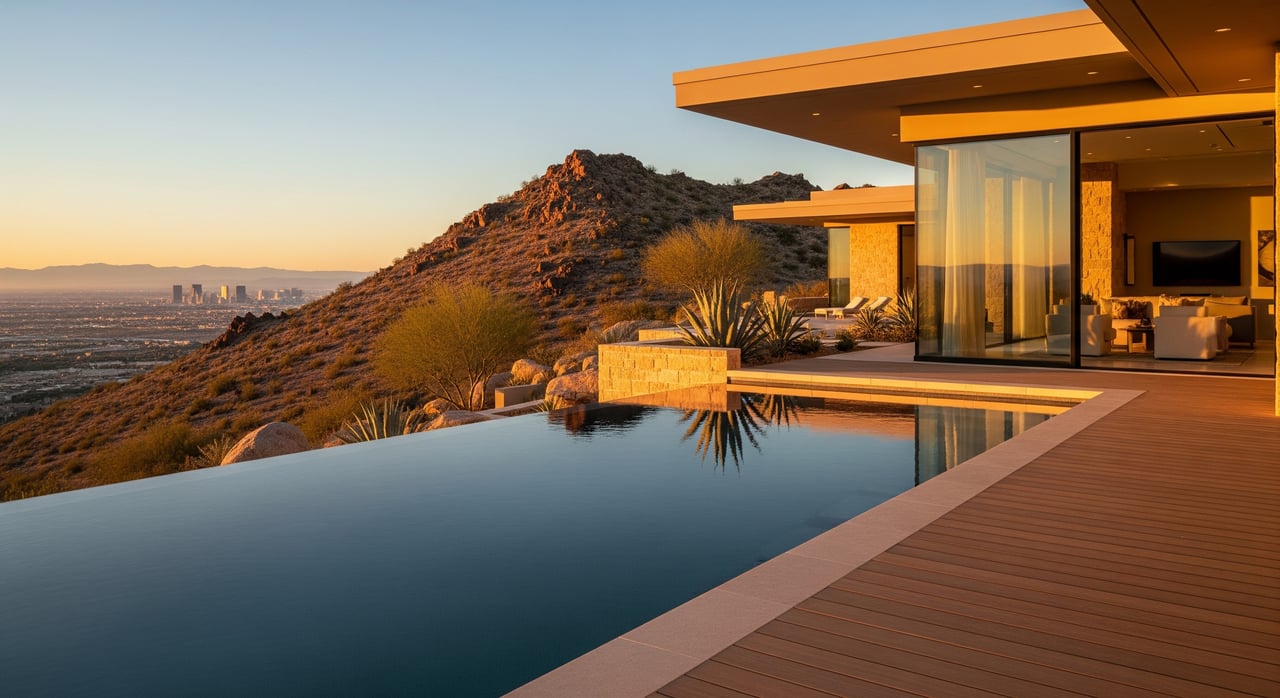
If you have ever stepped onto a terrace in MacDonald Highlands and watched the Las Vegas Strip glow at sunset, you understand why some hillside homes command more. Views, privacy, and elevation can push one property far above another, even when square footage and finishes look similar. If you are buying or selling in this community, you want to know exactly what drives those premiums and how to protect value.
In this guide, you will learn how elevation and topography shape pricing, what to expect with wind and microclimate, how build complexity factors into negotiations, and how appraisers quantify view differences. You will also get a practical due diligence checklist tailored to MacDonald Highlands and neighboring Ascaya. Let’s dive in.
What is an elevation premium?
An elevation premium is the additional value buyers pay for properties positioned higher on the slope with superior views and privacy. In MacDonald Highlands and Ascaya, that can mean ridge-top or bench lots with panoramic valley or Strip vistas. These sites often feel more exclusive and protected from downhill sightlines.
Elevation premiums reflect more than a view. They capture microclimate benefits, the perceived permanence of a view corridor, and the lifestyle utility of outdoor living spaces at height. They also reflect the extra costs and engineering that hillside sites can require.
View quality drives value
Orientation and depth
Views are the primary driver of premiums. Orientation matters. Strip-facing and panoramic valley views typically rank at the top. Mountain and golf views can also be valuable, especially when combined with elevation. The depth of view, or how far the eye travels across the valley, increases the sense of drama and can raise willingness to pay.
The degree of obstruction also counts. Fewer rooflines or structures in the foreground usually translates to higher value. Buyers respond to views that feel scarce, exclusive, and likely to remain unobstructed.
Ridge-top vs terrace vs lower-elevation
- Ridge-top lots: Highest elevations with the broadest panoramas. These locations often command the strongest premiums due to unobstructed sightlines and exclusivity. They also tend to experience the most wind exposure.
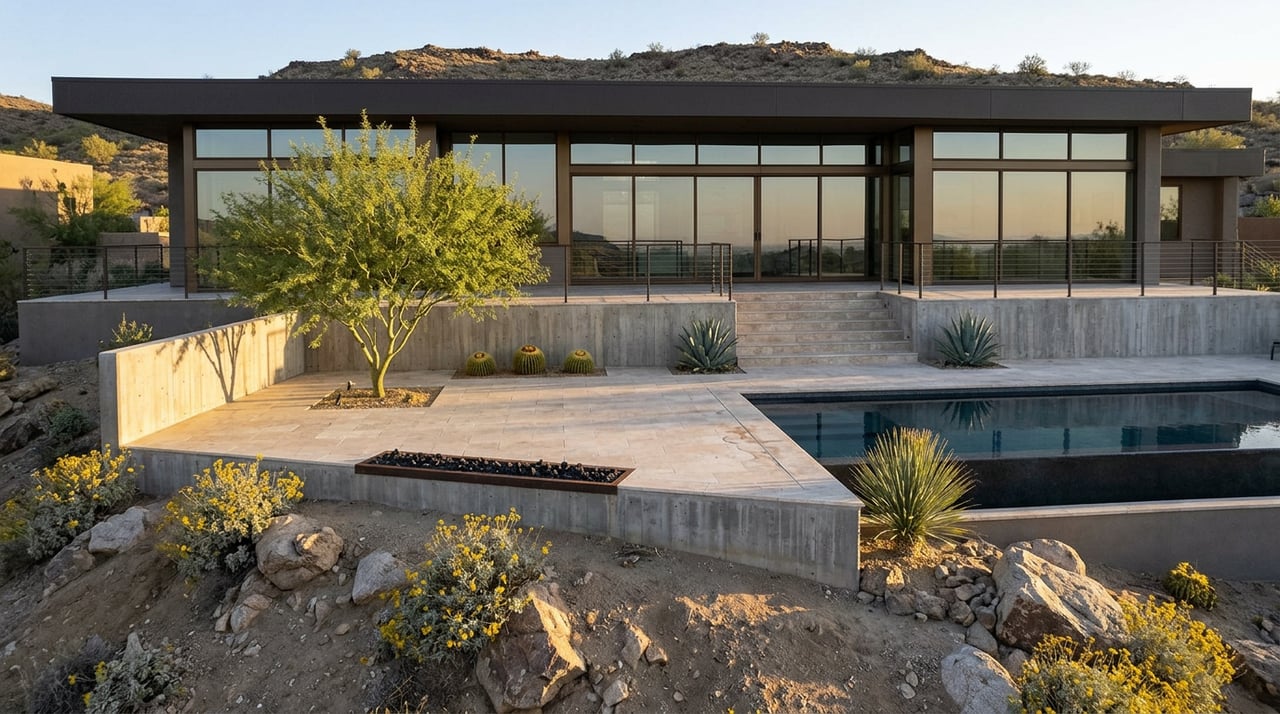
- Slope or terrace lots: Benched or excavated mid-slope sites. They often offer strong views at a lower price point than ridge-top and can be easier to build on than extreme slopes.
- Valley-facing or golf-facing lower-elevation lots: Typically easier and cheaper to build, with less wind exposure. Views can still be attractive, though usually less commanding than ridge or upper-bench homes.
Privacy and exclusivity
At higher elevations, neighbors have fewer direct sightlines into your space. Fewer adjacent lots share your vantage point. That sense of privacy is part of the premium for high-net-worth buyers who value discretion and quiet outdoor living.
Wind and microclimate at higher elevations
Ridge-top homes can experience stronger prevailing winds and greater thermal swings. That affects outdoor living, glazing choices, and structural design. You may need wind screens, strategic landscaping, or sheltered courtyards to extend the comfort of patios and pool decks.
Higher elevations can also feel slightly cooler, which is a benefit in Henderson’s hot summers. A typical lapse rate is about 3.5 degrees Fahrenheit per 1,000 feet of elevation. Even small differences are noticeable on a July afternoon.
Consider wind and temperature when planning outdoor kitchens, fireplaces, and pool placement. Design solutions can preserve comfort without sacrificing the view.
Construction and site costs on the hillside
Building on a slope is different from building on a flat lot. Expect more intensive site work and engineering to handle soil, slope, and drainage. Custom hillside projects often see 10 to 30 percent higher site-prep costs than comparable flat sites.
Common hillside cost drivers include:
- Grading and earthwork, plus retaining walls or stepped foundations
- Structural piers or caissons, along with enhanced wind load design
- Geotechnical investigations and engineered stormwater controls
- Extended utility runs, specialized driveways, and access solutions
These costs influence negotiations and valuation. Buyers account for them when comparing hillside options. Sellers should be ready to document improvements and engineering that support their price.
How appraisers measure elevation and view premiums
Sales comparison first
For luxury homes in Henderson, appraisers rely primarily on the sales comparison approach. They look for recent, nearby sales with similar lot topography and view quality, then adjust for differences based on actual market reactions. When necessary, the cost approach can capture extraordinary site improvements like major retaining systems or specialized foundations.
Typical adjustment ranges
There is no fixed universal premium, but market evidence and valuation practice point to common ranges:
- Minor upgrade, such as a partial valley or golf view, can warrant small adjustments in the low single digits, often around 2 to 7 percent.
- Significant upgrade, such as panoramic valley or Strip views at higher elevation, can support mid-range adjustments of roughly 5 to 20 percent.
- Extraordinary ridge-top sites with rare, exclusive vistas can exceed 20 percent. Scarcity and uniqueness can push premiums higher in limited cases.
Local context matters. In MacDonald Highlands and Ascaya, scarcity of comparable sales and buyer composition can move the needle. Paired sales within the same community are ideal for isolating view value.
Other valuation factors
- Usability of outdoor spaces: Pool decks, terraces, and outdoor kitchens are critical in luxury Las Vegas-area homes. If wind or slope limits usable space, premiums may moderate.
- Functional obsolescence: Excessive slope that reduces buildable yard or requires heavy retaining can weigh on value, even with a good view.
- HOA and CC&Rs: Height limits, setbacks, and architectural controls can affect your ability to capture or protect a view. That can influence both price and appraisal.
Buyer strategies in MacDonald Highlands
- Define the view you value most. Strip-facing and wide valley views tend to command more, but a well-framed mountain or golf view can be just as satisfying if it fits your lifestyle.
- Balance view with usability. Walk outdoor areas at different times of day to assess wind and sun. Ask about design options that preserve comfort without losing the vista.
- Budget for hillside site work. Factor in grading, retaining, foundations, utilities, and longer permitting timelines. Get estimates from builders experienced with local slopes.
- Verify view protections. Review CC&Rs, setbacks, and neighboring height limits. Ask about recorded view corridors and any planned development upslope or downslope.
- Confirm geotechnical and drainage plans. Understand soil conditions, stormwater control, and any easements that affect your build envelope.
Seller strategies that support a premium
- Package the story. Provide geotechnical reports, site maps, and architectural concepts that show how the lot can capture the view. Visual proof supports higher pricing.
- Highlight permanence and privacy. Document setbacks, elevation differences, and any view protections that reduce risk of future obstruction.
- Stage the outdoors. Wind screens, fire features, and thoughtful landscaping increase the perceived utility of terraces and pool decks.
- Support the appraisal. Share paired sales and recent community comps with similar orientation and elevation. Note extraordinary site improvements that factor into the cost approach.
- Address hazards early. Be ready to discuss slope stability, wildfire exposure, and drainage. Clear answers reduce friction and build buyer confidence.
MacDonald Highlands and Ascaya context
MacDonald Highlands blends elevated view living with a private golf environment and community amenities. Some parcels sit on slopes and ridgelines, while others adjoin golf or clubhouse areas. Ascaya is positioned for ridge-top contemporary estates with wide Strip and valley panoramas. Both communities are defined by hillside topography, which creates the elevation premiums discussed in this guide.
Due diligence checklist for hillside and view lots
Use this list to evaluate a site or prepare your property for market.
Site and legal
- Obtain a professional geotechnical report for soil, rock, and slope stability
- Review county parcel maps and HOA CC&Rs for height limits, setbacks, and site coverage
- Check for recorded drainage or maintenance easements that affect buildable area or view corridors
Engineering and construction
- Get preliminary grading and foundation estimates from experienced hillside builders or civil engineers
- Estimate costs for retaining walls, piers or caissons, driveways, and utility extensions
- Anticipate longer permitting timelines for slope work and grading permits
Insurance and hazards
- Evaluate wildfire exposure, rockfall or landslide potential, and flood or runoff risks
- Confirm insurability and likely premium impacts for property and hazard-specific coverages
Environmental and comfort
- Assess wind exposure around terraces and pools; consider wind-break design options
- Review solar orientation for passive heating or cooling and potential PV placement
Valuation and negotiation
- Gather comparable sales that match view quality and topography, ideally paired sales
- Ask local appraisers and agents for documented premiums in the immediate neighborhood
- For sellers, provide reports, renderings, and examples of recent custom builds to support the price narrative
Your next move
Whether you are selecting a view lot, designing a custom build, or pricing a finished estate, you want a clear plan for how elevation, wind, and build complexity affect value. With the right due diligence, you can optimize view, comfort, and cost, then defend your price at appraisal.
If you are considering a move in MacDonald Highlands or Ascaya, let a senior broker help you navigate the nuances of hillside living, from off-market opportunities to builder introductions and staging. Connect with Michele Sullivan - MS Luxury Homes to talk strategy and timing on your terms.
FAQs
What is an elevation premium in MacDonald Highlands?
- It is the added value buyers pay for higher-elevation homes or lots with superior views, privacy, and exclusivity within this hillside community.
How much more do ridge-top views cost in Henderson?
- Premiums vary by market conditions, but significant panoramic views often support roughly 5 to 20 percent adjustments, with rare, unique ridge-top sites exceeding 20 percent.
Does wind reduce the value of hillside homes in Henderson?
- Wind can affect outdoor usability and design choices, but smart wind-screening and layout solutions preserve comfort and help sustain elevation premiums.
Are hillside builds in MacDonald Highlands more expensive?
- Yes. Custom hillside projects often carry 10 to 30 percent higher site-prep costs than flat lots due to grading, retaining systems, specialized foundations, and access.
How do appraisers value views and elevation in luxury homes?
- Appraisers rely on sales comparison with similar topography and view quality, use percent adjustments informed by market evidence, and consider cost approach for major site work.
What due diligence should I complete before buying a view lot?
- Secure a geotechnical report, review CC&Rs and easements, get builder estimates, assess wind and solar orientation, and confirm insurability for slope-related risks.