If you have ever compared two Veer Towers condos with similar square footage and wondered why the prices were not even close, you are asking the right question. At Veer, value is not just about the floor plan or the floor number. It is shaped by a mix of height, orientation, and what your windows actually look out onto. Let’s break down how floor and view shape value at Veer Towers, and what that means if you plan to buy or sell.
Why Veer Towers prices by stack
Veer Towers is a 670-residence high-rise community in CityCenter, split between two 37-story towers, East and West, beside The Crystals retail district on the Las Vegas Strip. The project was designed with floor-to-ceiling glass, angled towers, and features intended to maximize daylight and views while managing solar exposure.
That design matters in a real-world pricing sense. In many buildings, buyers start with square footage and finish level. At Veer, the market often starts with the tower, stack, floor band, and view corridor because the same floor plan can feel very different depending on where it sits.
Floor matters, but not in a straight line
In high-rise condo markets, higher floors usually command higher prices. Research cited in the report found a positive floor premium, but it also found that the premium tends to shrink as you move higher.
That means the jump from a lower floor to a mid-level floor may matter more than the jump from an already high floor to an even higher one. In other words, there is often value in elevation, but not a simple dollars-per-floor rule you can apply across the building.
For Veer sellers, that is an important distinction. If you price your unit as though every extra floor carries the same bump, you can miss the market. Buyers tend to weigh height together with the actual view, daylight, and overall feel of the residence.
View corridors can change the number fast
Veer’s launch materials made clear that some residences look toward the Strip while others face Crystals or more interior CityCenter outlooks. That means view is not a small detail. It is one of the main value drivers inside the building.
High-rise valuation research referenced in the report found that partial views can outperform no meaningful view, and full views can command even stronger premiums after controlling for floor level. Those figures are not Veer-specific, but they help explain why two similar condos can trade at very different numbers.
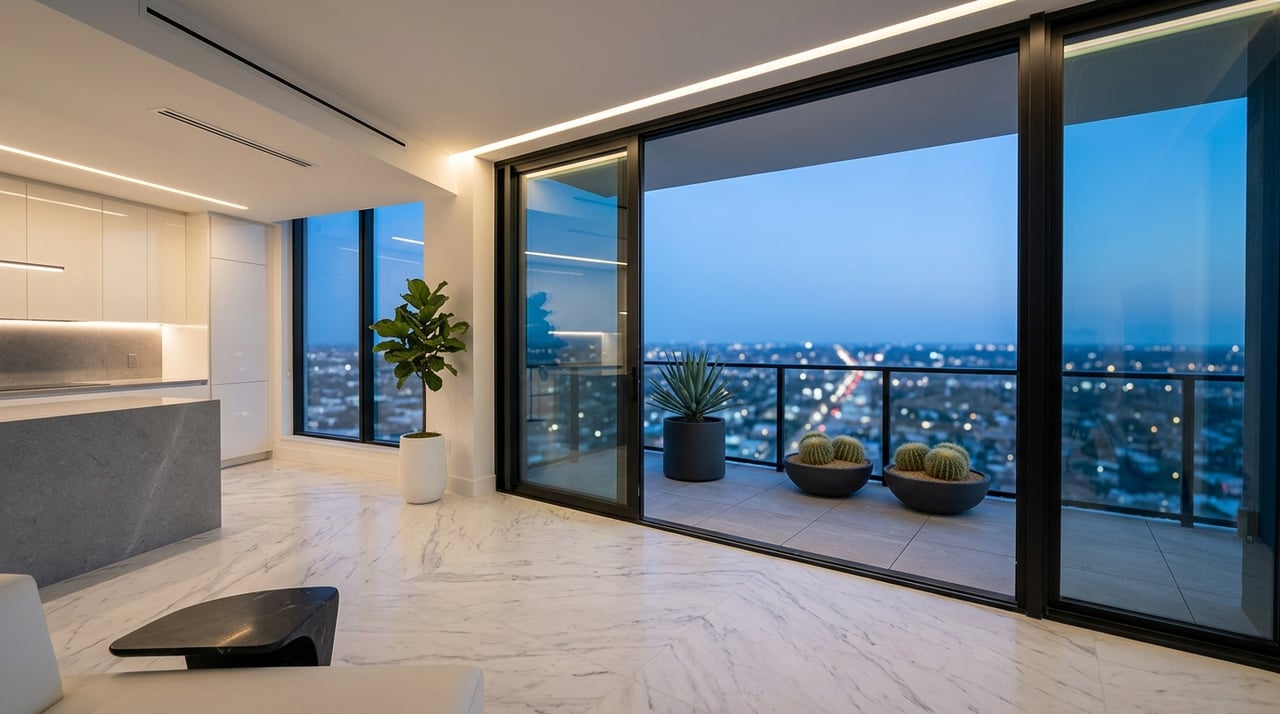
For buyers, this is why photos and a floor plan only tell part of the story. You are not just buying square footage. You are buying a sightline, a level of openness, and a daily visual experience.
Orientation affects both feel and function
At Veer, exposure is about more than scenery. Orientation can affect the kind of natural light you get, how strong the glare feels at certain times of day, and how the residence lives from morning to evening.
The research report notes that east- and west-facing glass can be harder to control for glare and solar heat gain, while north-facing windows tend to bring in more even light with less unwanted summer heat. West-facing exposure can also bring stronger afternoon sun.
In practical terms, a west- or southwest-facing residence may appeal to buyers who want sunset color, city lights, and classic Las Vegas energy. A more interior or north-facing stack may feel calmer or cooler by comparison. Neither is universally better. The market response depends on what the buyer values and how that stack compares with recent sales.
The top floors have a special dynamic
At Veer, the 37th floor is not just another residential level. It is the amenity deck, with features that include an infinity-edge pool, hot tub, sun deck, bar, recreation room, media room, fitness center, steam rooms, saunas, boardroom, business center, bike storage, mail room, concierge, valet, and 24-hour security.
That setup creates an interesting pricing layer near the top of the building. Upper floors may benefit from stronger views, but they are also in proximity to the building’s main amenity level. Depending on the stack, that relationship can either support a premium or narrow it.
This is one reason top-floor pricing at Veer should never rely on a broad assumption. The right comparison is usually another unit in the same tower, with a similar stack and similar outlook, not just another condo somewhere high in the building.
How buyers should evaluate a Veer unit
If you are buying at Veer, it helps to think in three filters first:
- Height
- Orientation
- View corridor
Once you narrow those down, then you can compare layout, finish level, and price per square foot.
A smart buying review often includes questions like these:
- Does the unit have a full Strip-facing view, a partial view, or a more interior outlook?
- Is the natural light soft and even, or does the residence get strong afternoon sun?
- Is the unit in the East or West tower?
- How does this exact stack compare with recent sales in the same floor band?
- Is the position near the amenity level a benefit for convenience or a factor to weigh more carefully?
This kind of analysis matters in a low-volume, premium submarket. Local reporting cited in the research report noted 10 sales at Veer Towers in Q1 2025, with an average sale price of $786,564, or $775 per square foot. That is useful context, but not a shortcut. In a building like Veer, averages can hide meaningful differences between stacks.
What sellers should document before pricing
If you are preparing to sell, the goal is to make your unit easy to understand and easy to compare. In a building where floor and view operate as separate value drivers, specifics matter.
Start by clearly documenting:
- The exact tower
- The stack
- The floor
- The bedroom count and square footage
- The primary sightline
- Whether the residence faces the Strip, Crystals, or a more interior CityCenter outlook
That information helps build a pricing narrative buyers can trust. It also helps your marketing speak to the right audience, especially when your unit’s value comes from a premium view corridor or a particularly attractive light exposure.
Why convenience can influence preference too
At first glance, pricing conversations at Veer seem centered on views and floor height. But the resident guide shows that daily logistics are also tightly managed, including controlled elevator access by fob and service elevator procedures for moves and deliveries.
Those details may not create the primary price premium, but they can shape buyer preference at the margins. In a luxury high-rise setting, convenience, privacy, and how a floor feels day to day can all influence which unit a buyer chooses when several options are close.
The real takeaway for Veer pricing
The simplest way to think about value at Veer Towers is this: higher is often better, but better view is often bigger. Height helps, yet the market does not reward every additional floor equally. And a strong view corridor can change the conversation quickly, even between condos with nearly identical layouts.
If you are buying, focus on what the residence actually offers from inside the glass, not just the floor number. If you are selling, price and market the unit by tower, stack, floor band, and sightline first. That is usually where the most accurate value story begins.
For a building as design-driven and stack-sensitive as Veer, careful analysis beats broad assumptions every time. If you want a discreet, data-driven opinion on how your Veer condo fits the market, connect with Michele Sullivan, PC.
FAQs
Does a higher floor always mean a higher value at Veer Towers?
- Usually, yes, but the premium tends to diminish as floors rise, so it is not a simple straight-line adjustment.
Are Strip-view condos worth more at Veer Towers?
- Often, yes. View corridor is a major value driver, and full or more dramatic views can command stronger pricing than partial or interior outlooks.
Does west-facing exposure hurt value at Veer Towers?
- Not necessarily. West-facing exposure can bring stronger afternoon sun and glare, but it can also deliver sunsets, city lights, and a view experience many buyers want.
How should a seller price a Veer Towers condo?
- The cleanest approach is to compare recent sales by tower, stack, floor band, and view corridor before relying on square footage alone.
What should a Veer Towers seller highlight in marketing?
- A seller should clearly show the tower, stack, floor, exact outlook, and whether the residence faces the Strip, Crystals, or more interior CityCenter views.